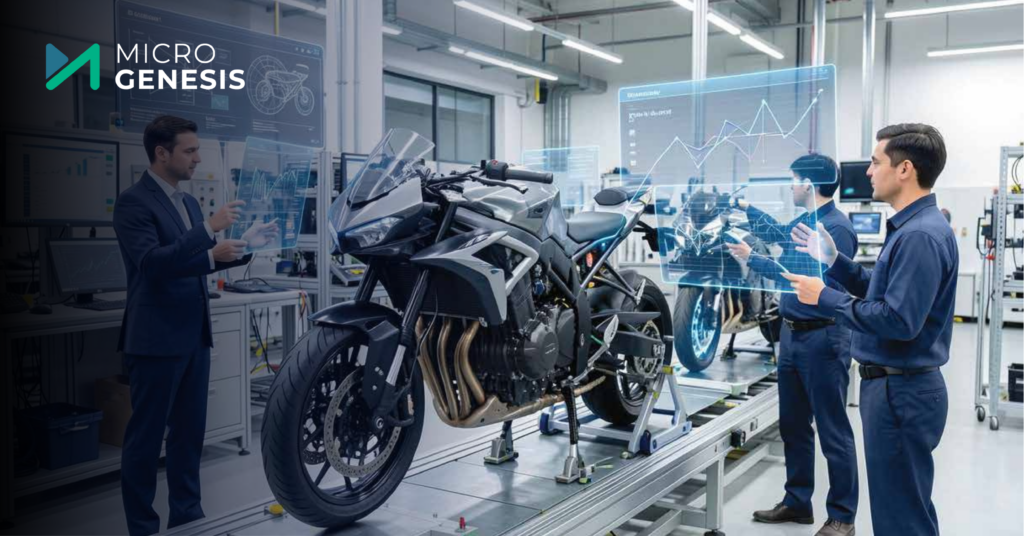

Modern engineering organizations are no longer building products within a single engineering discipline. Today’s connected vehicles, aircraft, medical devices, industrial equipment, and smart products combine mechanical engineering, embedded software, electronics, cloud connectivity, artificial intelligence (AI), cybersecurity, and regulatory compliance into highly sophisticated systems.
As product complexity grows, engineering teams face increasing challenges in managing requirements, system designs, software development, testing, validation, and compliance across globally distributed teams. Requirements evolve continuously, software is released more frequently, and regulatory standards become more stringent. Traditional engineering approaches that rely on disconnected tools, spreadsheets, and manual documentation struggle to keep pace with these demands.
This is where Engineering Lifecycle Management (ELM) becomes essential.
Engineering Lifecycle Management provides a structured framework for managing engineering data, processes, people, and tools throughout the entire product lifecycle, from initial concept and requirements definition to system design, software development, testing, deployment, maintenance, and engineering change management. Rather than treating these activities as isolated functions, ELM connects them into a unified engineering ecosystem that improves collaboration, enhances traceability, and accelerates product innovation.
Engineering Lifecycle Management is often compared with Application Lifecycle Management (ALM). While ALM focuses on managing the software application lifecycle, ELM covers the broader engineering lifecycle, including systems engineering, requirements management, verification, and compliance. Learn more about the differences in our ELM vs ALM guide.
Organizations looking to modernize their engineering processes often implement IBM Engineering Lifecycle Management (IBM ELM) to unify requirements management, workflow automation, quality management, systems engineering, and reporting into a single platform.
Engineering Lifecycle Management has become the foundation for developing complex, software-defined, and safety-critical products across industries such as:
- Automotive
- Aerospace & Defense
- Medical Devices
- Rail & Transportation
- Industrial Manufacturing
- Electronics & Semiconductor
- Energy & Utilities
- Heavy Equipment
These industries must comply with rigorous standards including ASPICE, ISO 26262, DO-178C, IEC 62304, FDA regulations, and EN 50128. A well-implemented ELM strategy helps organizations maintain end-to-end traceability, improve engineering collaboration, streamline compliance, and deliver high-quality products faster.
If you’re new to the discipline, this Engineering Lifecycle Management Guide provides a comprehensive overview of the principles, components, benefits, implementation strategies, and leading tools that enable organizations to build connected engineering ecosystems.
What Is Engineering Lifecycle Management?
Engineering Lifecycle Management (ELM) is the process of managing engineering activities, engineering data, engineering workflows, and engineering collaboration throughout the complete product lifecycle—from capturing requirements and designing system architectures to software development, testing, validation, deployment, maintenance, and continuous product improvement.
Unlike standalone engineering tools that focus on individual disciplines, Engineering Lifecycle Management connects every engineering artifact into a unified ecosystem. This integrated approach enables organizations to establish complete traceability between requirements, system models, source code, test cases, defects, change requests, and product releases.
By maintaining these relationships throughout the lifecycle, ELM helps engineering teams understand the impact of changes, improve collaboration, reduce development risks, and ensure compliance with industry regulations.
A modern Engineering Lifecycle Management platform typically manages:
- Requirements Management
- Systems Engineering
- Software Development
- Test Management
- Change Management
- Configuration Management
- Verification and Validation
- Compliance Management
- Release Management
- Engineering Traceability
Engineering Lifecycle Management works alongside Product Lifecycle Management (PLM) to support successful product development. While ELM manages engineering activities such as requirements, systems engineering, software development, and validation, PLM oversees the complete product lifecycle from concept and manufacturing to service. Learn more about the differences in our guide on ELM vs PLM.
Modern engineering teams increasingly use Model-Based Systems Engineering (MBSE) to design, analyze, and validate complex systems. While MBSE focuses on creating and managing system models, Engineering Lifecycle Management provides end-to-end governance, traceability, and collaboration across the entire engineering lifecycle. Learn how these approaches work together in our ELM vs MBSE comparison.
Instead of working in disconnected systems, engineering teams collaborate within a shared environment where every stakeholder has access to accurate, up-to-date engineering information. This eliminates information silos, improves decision-making, and increases productivity across multidisciplinary teams.
For organizations developing complex products that integrate hardware, software, electronics, and embedded systems, Engineering Lifecycle Management provides the visibility and governance needed to deliver products efficiently while maintaining quality and compliance.
Why Engineering Lifecycle Management Matters
The rapid evolution of connected, intelligent products has significantly increased the complexity of engineering projects. Modern products now combine mechanical systems, embedded software, cloud connectivity, artificial intelligence, cybersecurity, and regulatory requirements, all of which must be managed throughout development.
Without Engineering Lifecycle Management, organizations often face challenges such as:
- Disconnected engineering tools and fragmented data
- Poor collaboration between software, hardware, and systems engineering teams
- Limited visibility into project progress
- Manual requirements traceability
- Difficult impact analysis when requirements change
- Delayed product releases
- Increased engineering costs
- Complex regulatory audits
- Higher risk of quality issues
Engineering Lifecycle Management addresses these challenges by connecting engineering activities into a single lifecycle, enabling organizations to make informed decisions based on real-time engineering information.
Improved Cross-Functional Collaboration
Engineering teams across multiple disciplines—including mechanical, electrical, electronics, software, quality assurance, and systems engineering—can collaborate using a shared source of engineering information. This minimizes communication gaps, reduces duplicate work, and improves overall engineering efficiency.
End-to-End Engineering Visibility
Project managers, architects, and engineering leaders gain complete visibility into requirements coverage, development progress, testing status, defects, engineering changes, and project risks. This enables faster decision-making and more accurate project planning.
Complete Engineering Traceability
One of the greatest strengths of Engineering Lifecycle Management is its ability to maintain traceability throughout the product lifecycle. Every requirement can be linked to design models, software implementation, verification activities, test results, defects, and released products, providing a complete history of engineering decisions.
Faster Product Development
By integrating engineering tools and automating workflows, ELM reduces manual effort, accelerates collaboration, and shortens development cycles. Teams spend less time searching for information and more time focusing on innovation.
Improved Product Quality
Continuous verification, validation, and lifecycle traceability help identify issues earlier in the development process. This reduces costly rework while improving product reliability, customer satisfaction, and overall engineering quality.
Simplified Regulatory Compliance
Organizations operating in regulated industries must demonstrate compliance with standards such as:
- ASPICE
- ISO 26262
- DO-178C
- IEC 62304
- EN 50128
- FDA Regulations
Engineering Lifecycle Management simplifies compliance by maintaining complete engineering records, version history, approvals, and traceability throughout the development lifecycle. This significantly reduces the effort required for regulatory audits Core Components of Engineering Lifecycle Management
Engineering Lifecycle Management integrates multiple engineering disciplines into a connected environment where information flows seamlessly across the entire product lifecycle. Instead of treating engineering activities as independent processes, ELM links them together, enabling better collaboration, traceability, and governance.
The following components form the foundation of a successful Engineering Lifecycle Management strategy.while ensuring engineering governance and accountability.
1. Requirements Management
Every engineering project begins with requirements. These define customer expectations, business objectives, regulatory obligations, functional specifications, and system constraints.
Without structured requirements management, engineering teams often struggle with inconsistent documentation, uncontrolled changes, and communication gaps that lead to delays and costly rework.
Engineering Lifecycle Management enables organizations to:
- Capture and organize requirements
- Prioritize business and technical requirements
- Maintain version history
- Review and approve changes
- Establish traceability across the lifecycle
- Analyze requirement impacts
- Collaborate across distributed engineering teams
By maintaining a single source of truth, organizations reduce ambiguity while ensuring that every requirement is implemented, verified, and validated throughout product development.
Many organizations adopt IBM DOORS Next as their enterprise requirements management platform because it enables collaborative authoring, end-to-end traceability, and lifecycle governance for complex engineering programs. Learn more about IBM Engineering Lifecycle Management (IBM ELM)
2. Systems Engineering
Modern products combine hardware, embedded software, electronics, cloud connectivity, cybersecurity, and AI into highly integrated systems.
Systems Engineering helps organizations define system architectures, model behavior, allocate requirements, and validate system performance before implementation begins.
Engineering Lifecycle Management strengthens Systems Engineering by connecting:
- Customer requirements
- Functional architecture
- System models
- Engineering specifications
- Verification activities
- Validation results
Organizations adopting Model-Based Systems Engineering (MBSE) can further improve collaboration and lifecycle visibility.
3. Software Development
Software has become the defining component of modern engineering products. Whether developing autonomous vehicles, industrial automation systems, connected medical devices, or smart manufacturing equipment, software drives innovation across nearly every industry.
Engineering Lifecycle Management connects software development with upstream engineering activities by linking:
- Requirements
- User stories
- Development tasks
- Source code repositories
- Build pipelines
- Test cases
- Defects
- Release activities
Instead of managing software development independently, engineering teams gain complete visibility into how every software change impacts product requirements and system behavior.
Modern organizations also integrate DevOps practices and CI/CD pipelines into their Engineering Lifecycle Management environment to accelerate software delivery while maintaining quality and compliance.
4. Test Management
Testing validates whether engineering requirements have been correctly implemented and whether products perform as expected under real-world conditions.
Engineering Lifecycle Management provides centralized Test Management capabilities that connect testing directly with requirements and development activities.
Typical capabilities include:
- Test planning
- Test case creation
- Test execution
- Automated testing
- Defect tracking
- Verification reporting
- Validation activities
- Test coverage analysis
When test cases are directly linked to engineering requirements, organizations can quickly identify coverage gaps and verify whether every requirement has been successfully validated before release.
5. Engineering Traceability
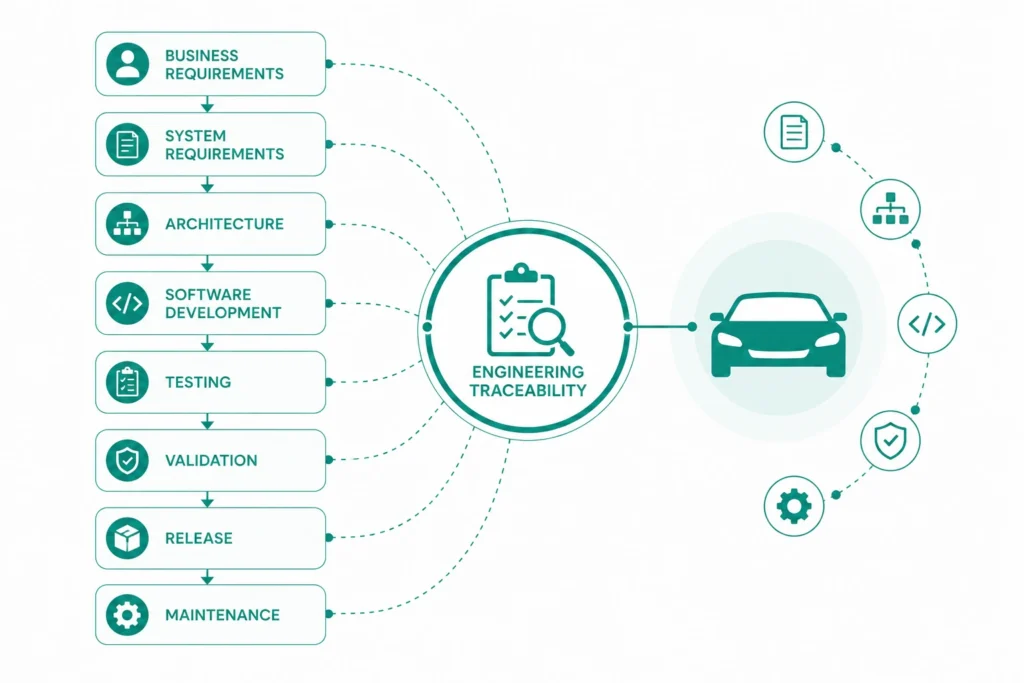
Engineering Traceability is one of the most valuable capabilities of Engineering Lifecycle Management.
Traceability establishes relationships between every engineering artifact throughout the product lifecycle, creating complete visibility from initial customer requirements through product release and maintenance.
A typical traceability chain includes:
Business Requirements
↓
System Requirements
↓
Architecture
↓
Software Development
↓
Testing
↓
Validation
↓
Release
↓
Maintenance
Complete lifecycle traceability also forms the foundation of a Digital Thread, allowing organizations to understand change impacts, improve engineering visibility, and accelerate decision-making across multidisciplinary teams.
6. Change & Configuration Management
Engineering changes occur throughout every product development project. Customer requirements evolve, defects are discovered, regulatory standards change, and new product features are introduced continuously.
Engineering Lifecycle Management provides structured processes for:
- Change requests
- Engineering approvals
- Impact analysis
- Version control
- Configuration management
- Baseline management
- Release governance
By linking change requests with requirements, software development, testing, and validation activities, organizations can evaluate risks before implementing changes, minimizing disruptions and reducing engineering rework.
7. Compliance Management
Organizations developing products for regulated industries must demonstrate compliance with standards throughout the engineering lifecycle.
Engineering Lifecycle Management simplifies compliance by maintaining complete lifecycle records, automated traceability, version history, electronic approvals, and comprehensive audit documentation.
Common standards include:
- ASPICE
- ISO 26262
- IEC 62304
- DO-178C
- EN 50128
- IEC 61508
Engineering Lifecycle Management enables organizations to generate compliance evidence directly from their engineering platform, significantly reducing audit preparation time while improving governance.
Engineering Lifecycle Management vs Application Lifecycle Management (ALM)
Although Engineering Lifecycle Management (ELM) and Application Lifecycle Management (ALM) are closely related, they address different aspects of product development. Understanding their roles helps organizations select the right lifecycle management strategy for their engineering and software initiatives.
Application Lifecycle Management (ALM) focuses on the complete lifecycle of software applications. It covers planning, software development, testing, deployment, maintenance, and continuous delivery. ALM is primarily designed for software engineering teams developing enterprise or commercial applications.
Engineering Lifecycle Management (ELM), on the other hand, manages the entire engineering lifecycle of complex products that integrate hardware, embedded software, electronics, systems engineering, and regulatory compliance. ELM connects requirements, architecture, software development, testing, verification, validation, configuration management, and engineering changes within a single engineering ecosystem.
For organizations developing software-defined products in industries such as automotive, aerospace, rail, medical devices, and industrial manufacturing, Engineering Lifecycle Management provides broader governance, complete lifecycle traceability, and cross-functional collaboration beyond the capabilities of a traditional ALM solution.
| Engineering Lifecycle Management (ELM) | Application Lifecycle Management (ALM) |
|---|---|
| Covers the complete engineering lifecycle | Focuses primarily on software development |
| Supports hardware and software engineering | Software-centric approach |
| Includes systems engineering | Limited systems engineering capabilities |
| Enables end-to-end engineering traceability | Primarily tracks software artifacts |
| Supports regulatory compliance | Focuses on software delivery processes |
| Ideal for complex engineering products | Ideal for enterprise software applications |
As products become increasingly software-driven, many organizations use ALM as one component of a broader Engineering Lifecycle Management strategy, ensuring software development remains aligned with engineering requirements, product architecture, testing, and compliance objectives.
Engineering Lifecycle Management vs Product Lifecycle Management (PLM)
Engineering Lifecycle Management (ELM) and Product Lifecycle Management (PLM) are complementary disciplines that support different phases of product development.
Product Lifecycle Management (PLM) focuses on managing product information throughout its lifecycle, including product design, manufacturing, supply chain operations, production, maintenance, and end-of-life management. It enables collaboration between engineering, manufacturing, procurement, and service teams.
Engineering Lifecycle Management, however, concentrates on engineering execution before manufacturing begins. It manages requirements, systems engineering, software development, testing, validation, engineering changes, and compliance while ensuring complete traceability throughout the engineering lifecycle.
Rather than replacing each other, ELM and PLM work together to establish a connected digital engineering environment.
Typical workflow
Customer Requirements
↓
Engineering Lifecycle Management
↓
Validated Product Design
↓
Product Lifecycle Management
↓
Manufacturing
↓
Service & Maintenance
Organizations that integrate ELM with PLM achieve better collaboration between engineering and manufacturing teams, reduce product development risks, and accelerate the transition from product design to production.
Engineering Lifecycle Management vs Model-Based Systems Engineering (MBSE)
Engineering Lifecycle Management (ELM) and Model-Based Systems Engineering (MBSE) are often viewed as competing concepts, but they actually complement each other within modern product development.
Model-Based Systems Engineering (MBSE) is a methodology that replaces document-based engineering with model-centric design. Engineers use system models to define architecture, behavior, interfaces, and requirements, improving collaboration and reducing design complexity.
Engineering Lifecycle Management, in contrast, provides the governance framework that connects these models with every other engineering artifact—including requirements, software development, testing, verification, validation, defects, engineering changes, and compliance documentation.
When MBSE is integrated into an Engineering Lifecycle Management environment, organizations gain complete lifecycle traceability while maintaining consistency between system models and downstream engineering activities. This integration improves engineering quality, simplifies change impact analysis, and enhances collaboration across multidisciplinary teams.
Building a Digital Thread with Engineering Lifecycle Management
As products become more connected and software-intensive, engineering organizations require continuous visibility across every stage of product development. A Digital Thread enables this by connecting engineering information into a single, traceable flow throughout the lifecycle.
Engineering Lifecycle Management forms the foundation of a Digital Thread by linking:
- Customer requirements
- System architecture
- Engineering models
- Software development
- Test cases and results
- Engineering change requests
- Compliance documentation
- Product releases
- Maintenance activities
Instead of managing isolated engineering documents, organizations maintain a connected engineering ecosystem where every artifact is related to upstream and downstream activities.
For example, when a requirement changes, engineering teams can immediately identify affected system models, software components, test cases, validation activities, and product configurations. This significantly improves impact analysis, accelerates decision-making, minimizes engineering risks, and reduces costly rework.
Organizations implementing a Digital Thread gain greater lifecycle visibility, stronger engineering collaboration, improved traceability, and faster product development—making it a critical capability for modern engineering organizations developing complex and regulated products.
Benefits of Engineering Lifecycle Management
Implementing Engineering Lifecycle Management (ELM) delivers far more than improved project organization. It creates a connected engineering environment where people, processes, and tools work together seamlessly, enabling organizations to develop high-quality products faster while maintaining compliance and reducing engineering risks.
As engineering complexity continues to increase, organizations that adopt ELM gain significant operational and strategic advantages across the entire product development lifecycle.
Improved Cross-Functional Collaboration
Engineering teams often work across multiple disciplines, including systems engineering, software development, mechanical design, electronics, quality assurance, manufacturing, and compliance. Without a centralized platform, these teams frequently operate in silos, leading to communication gaps and inconsistent engineering data.
Engineering Lifecycle Management establishes a shared engineering environment where stakeholders can collaborate using the same set of requirements, engineering artifacts, and project information. This improves communication, reduces misunderstandings, and enables faster decision-making throughout product development.
End-to-End Engineering Traceability
One of the most significant advantages of Engineering Lifecycle Management is complete lifecycle traceability.
Every engineering artifact—from customer requirements and system specifications to software code, test cases, defects, and engineering changes—can be connected through traceable relationships.
This enables organizations to:
- Perform rapid impact analysis
- Verify requirement coverage
- Identify missing links
- Simplify root cause analysis
- Improve engineering transparency
- Support regulatory audits
Complete traceability also reduces the risk of overlooked requirements or undocumented engineering changes that can affect product quality.
Faster Product Development
Disconnected engineering processes often create bottlenecks caused by manual documentation, duplicated work, and delayed communication between teams.
Engineering Lifecycle Management streamlines engineering workflows by integrating development, testing, change management, and validation activities into a single environment.
As a result, organizations can:
- Reduce engineering rework
- Shorten development cycles
- Improve resource utilization
- Accelerate product releases
- Increase engineering productivity
These improvements help organizations respond more quickly to changing customer requirements and evolving market demands.
Better Engineering Change Management
Engineering changes are inevitable throughout the product lifecycle. Whether driven by customer feedback, regulatory updates, design improvements, or defect resolution, every change has the potential to affect multiple engineering disciplines.
Engineering Lifecycle Management enables organizations to manage changes in a controlled manner through structured approval workflows, impact analysis, version control, and complete lifecycle traceability.
This ensures engineering teams understand the consequences of every change before implementation, reducing project risks while maintaining product consistency.
Improved Product Quality
Product quality depends on the ability to verify that every requirement has been correctly implemented and validated before release.
Engineering Lifecycle Management connects requirements directly with testing, verification, validation, and defect management activities.
This integrated approach enables organizations to:
- Improve test coverage
- Detect issues earlier
- Reduce production defects
- Improve product reliability
- Increase customer satisfaction
By identifying problems early in development, organizations significantly reduce the cost of correcting defects later in the product lifecycle.
Engineering Lifecycle Management works alongside Product Lifecycle Management (PLM) to support successful product development. While ELM manages engineering activities such as requirements, systems engineering, software development, and validation, PLM oversees the complete product lifecycle from concept and manufacturing to service. Learn more about the differences in our guide on ELM vs PLM.
Simplified Regulatory Compliance
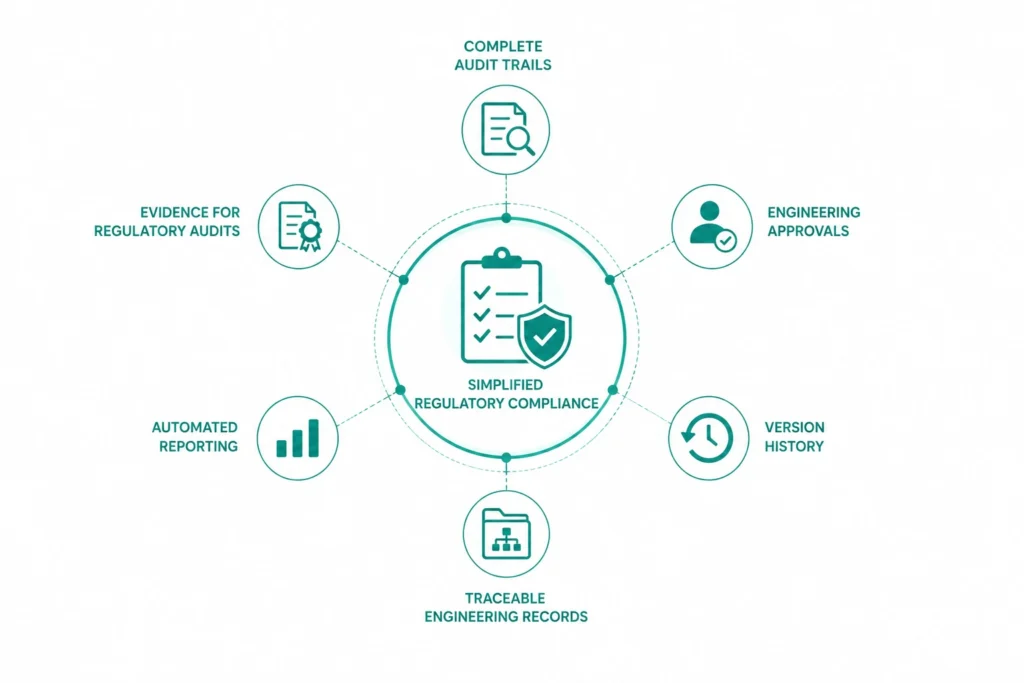
Organizations operating in highly regulated industries must maintain extensive engineering documentation and demonstrate compliance with standards throughout product development.
Engineering Lifecycle Management supports compliance by maintaining:
- Complete audit trails
- Engineering approvals
- Version history
- Traceable engineering records
- Automated reporting
- Evidence for regulatory audits
This significantly reduces the effort required to prepare for compliance assessments while improving engineering governance.
Industries That Benefit from Engineering Lifecycle Management
Engineering Lifecycle Management is widely adopted across industries that develop complex, software-intensive, and safety-critical products.
Automotive
Automotive manufacturers rely on ELM to manage requirements, embedded software, systems engineering, functional safety, and compliance with standards such as ASPICE and ISO 26262.
Aerospace & Defense
Aircraft and defense systems require rigorous engineering processes, complete lifecycle traceability, and strict regulatory compliance. Engineering Lifecycle Management helps organizations manage highly complex engineering programs while maintaining certification readiness.
Medical Devices
Medical device manufacturers use Engineering Lifecycle Management to support regulatory compliance, risk management, verification, validation, and complete product documentation throughout development.
Rail & Transportation
Rail organizations depend on Engineering Lifecycle Management to develop reliable transportation systems while complying with standards such as EN 50128 and ensuring complete engineering traceability.
Industrial Manufacturing
Manufacturers developing connected machinery, automation systems, and industrial equipment use ELM to coordinate multidisciplinary engineering teams, improve collaboration, and accelerate product innovation.
Electronics & Semiconductor
Electronics companies use Engineering Lifecycle Management to manage increasingly complex hardware-software integration while reducing engineering risks and improving product quality.
Energy & Utilities
Organizations developing smart grids, renewable energy systems, and industrial control systems rely on Engineering Lifecycle Management to maintain engineering consistency while managing long product lifecycles.
Best Practices for Implementing Engineering Lifecycle Management
A successful Engineering Lifecycle Management initiative requires more than deploying software. Organizations should establish standardized engineering processes and ensure engineering data remains connected throughout the product lifecycle.
Key best practices include:
- Establish standardized engineering workflows across departments.
- Define a centralized requirements management process.
- Maintain end-to-end engineering traceability.
- Integrate engineering tools into a connected ecosystem.
- Standardize engineering change and configuration management.
- Automate testing and verification wherever possible.
- Monitor engineering KPIs and continuously improve processes.
- Train engineering teams on standardized lifecycle management practices.
- Regularly review governance policies to ensure compliance with evolving industry standards.
Following these best practices helps organizations maximize the value of Engineering Lifecycle Management while improving collaboration, reducing engineering risks, and accelerating product development.
Common Engineering Lifecycle Management Tools
Selecting the right Engineering Lifecycle Management (ELM) platform is a critical step in building a connected engineering ecosystem. The ideal solution should integrate requirements management, systems engineering, software development, testing, change management, and compliance into a unified environment while supporting collaboration across multidisciplinary teams.
Today, several enterprise platforms help organizations manage increasingly complex engineering processes.
IBM Engineering Lifecycle Management (IBM ELM)
IBM Engineering Lifecycle Management is a comprehensive platform designed for organizations developing complex, software-intensive, and safety-critical products. It integrates requirements management, workflow management, quality management, reporting, and systems engineering to provide end-to-end lifecycle traceability.
IBM ELM is widely used in industries such as automotive, aerospace, defense, medical devices, and industrial manufacturing where regulatory compliance and engineering governance are essential.
IBM DOORS Next
IBM DOORS Next is a modern requirements management solution that enables organizations to capture, manage, review, and trace requirements throughout the engineering lifecycle.
Its collaborative web-based environment allows engineering teams to maintain a single source of truth for requirements while supporting impact analysis, version control, and regulatory compliance.
IBM Engineering Test Management (ETM)
IBM Engineering Test Management helps organizations plan, execute, monitor, and report testing activities across the entire development lifecycle.
By connecting test cases directly to engineering requirements, organizations improve verification coverage, simplify validation, and maintain complete lifecycle traceability.
IBM Engineering Workflow Management (EWM)
IBM Engineering Workflow Management enables agile planning, software development, source code management, build automation, and team collaboration within Engineering Lifecycle Management environments.
It helps organizations streamline software delivery while maintaining visibility into engineering progress and project health.
PTC Codebeamer
PTC Codebeamer is an enterprise Application Lifecycle Management and Engineering Lifecycle Management platform that supports requirements management, risk management, test management, product line engineering, and compliance for regulated industries.
It is widely adopted by automotive manufacturers, medical device companies, and industrial engineering organizations developing software-defined products.
Siemens Polarion
Polarion provides integrated requirements management, quality assurance, software development, and compliance management through a unified ALM platform.
Organizations use Polarion to improve collaboration, maintain traceability, and accelerate product development across distributed engineering teams.
Git-Based DevOps Platforms
Development platforms such as GitLab, GitHub, Azure DevOps, and Jenkins are frequently integrated with Engineering Lifecycle Management solutions to automate software development, continuous integration, continuous testing, and deployment activities.
Together, these platforms create a connected engineering ecosystem that supports modern DevOps practices while maintaining lifecycle traceability.
Why Choose MicroGenesis for Engineering Lifecycle Management?
Implementing Engineering Lifecycle Management requires more than deploying software—it requires a well-defined strategy, proven implementation methodologies, seamless tool integrations, and deep domain expertise.
With over 25 years of experience, MicroGenesis helps organizations modernize engineering processes through end-to-end Engineering Lifecycle Management consulting, implementation, migration, integration, customization, and managed services.
Our expertise spans:
- Engineering Lifecycle Management implementation
- IBM Engineering Lifecycle Management (IBM ELM)
- Requirements Management
- Systems Engineering
- Engineering Traceability
- Model-Based Systems Engineering (MBSE)
- Digital Engineering Transformation
- Engineering toolchain integration
- Compliance enablement for regulated industries
- Enterprise engineering consulting
Our consultants work closely with organizations across automotive, aerospace, defense, medical devices, industrial manufacturing, electronics, rail, and high-tech industries to build scalable engineering ecosystems that improve collaboration, accelerate innovation, and ensure regulatory compliance.
Whether your organization is beginning its digital engineering journey or optimizing an existing Engineering Lifecycle Management environment, MicroGenesis provides the expertise needed to maximize the value of your engineering investments.
Frequently Asked Questions
What is Engineering Lifecycle Management (ELM)?
Engineering Lifecycle Management (ELM) is the practice of managing engineering data, processes, teams, and tools throughout the complete product lifecycle—from requirements and system design to development, testing, deployment, maintenance, and product evolution.
Why is Engineering Lifecycle Management important?
ELM improves collaboration, enables end-to-end traceability, supports regulatory compliance, streamlines engineering workflows, and helps organizations develop high-quality products faster.
What is the difference between Engineering Lifecycle Management and Application Lifecycle Management?
Engineering Lifecycle Management manages the complete engineering lifecycle of complex products, while Application Lifecycle Management focuses primarily on software application development and delivery.
How does Engineering Lifecycle Management improve traceability?
ELM connects requirements, designs, software development, testing, defects, engineering changes, and compliance documentation into a unified lifecycle, enabling complete traceability and faster impact analysis.
Which industries benefit from Engineering Lifecycle Management?
Industries including automotive, aerospace, defense, medical devices, rail, industrial manufacturing, electronics, semiconductor, and energy benefit significantly from Engineering Lifecycle Management due to their complex engineering processes and regulatory requirements.
Is Engineering Lifecycle Management suitable for Agile development?
Yes. Modern Engineering Lifecycle Management platforms support Agile, Scrum, SAFe®, DevOps, Continuous Integration (CI), and Continuous Delivery (CD) practices while maintaining engineering governance and lifecycle traceability.
What are the key components of an Engineering Lifecycle Management platform?
A comprehensive ELM platform typically includes requirements management, systems engineering, software development, test management, configuration management, change management, compliance management, reporting, and engineering traceability.
How do I choose the right Engineering Lifecycle Management platform?
Organizations should evaluate factors such as scalability, integration capabilities, traceability, compliance support, collaboration features, reporting, industry-specific requirements, and long-term business objectives before selecting an ELM solution.
Conclusion
Engineering Lifecycle Management has become the foundation of modern product engineering. As products continue to integrate software, electronics, cloud technologies, artificial intelligence, and connected systems, organizations need a unified engineering environment that enables collaboration, maintains traceability, and ensures compliance throughout the product lifecycle.
By connecting requirements, systems engineering, software development, testing, change management, verification, validation, and compliance into a single ecosystem, Engineering Lifecycle Management empowers organizations to reduce engineering complexity, improve product quality, accelerate innovation, and respond quickly to changing market demands.
Organizations that invest in a robust Engineering Lifecycle Management strategy are better positioned to deliver reliable, software-defined products while meeting the growing expectations of customers, regulators, and global markets.
Whether you’re modernizing legacy engineering processes or implementing a new digital engineering strategy, adopting Engineering Lifecycle Management is a critical step toward building a more connected, efficient, and future-ready engineering organization.