
Effective requirements management is the foundation of successful product development, particularly for organizations building complex and safety-critical systems in industries such as automotive, aerospace, defense, rail, electronics, and medical devices. As engineering teams become more geographically distributed and products grow in complexity, organizations require collaborative tools that provide secure access to requirements while maintaining complete lifecycle traceability.
IBM Engineering Requirements Management DOORS – Web Access (DWA) addresses this need by offering a browser-based interface that enables users to access, review, edit, and collaborate on requirements stored in the IBM DOORS repository. Unlike the traditional desktop client, DWA allows engineers, business analysts, project managers, quality teams, suppliers, and other stakeholders to work from virtually anywhere using a standard web browser.
As part of IBM Engineering Lifecycle Management IBM DOORS Web Access extends the capabilities of Classic DOORS by improving accessibility without compromising governance, security, or traceability. Organizations can involve more stakeholders in requirements reviews, accelerate decision-making, and improve collaboration across the entire engineering lifecycle.
Whether you’re maintaining an existing IBM DOORS environment or planning future modernization, DWA provides a practical solution for improving engineering collaboration while preserving your investment in IBM DOORS. In this guide, we’ll explore its key capabilities, business benefits, best practices, and how organizations can maximize value through expert IBM ELM consulting services and implementation support.
What is IBM DOORS Web Access (DWA)?
IBM DOORS Web Access (DWA) is a web-based client for IBM Engineering Requirements Management DOORS (Classic DOORS) that enables authorized users to securely access requirements without installing the traditional desktop application.
Using any supported web browser, stakeholders can review requirements, participate in discussions, edit requirement attributes, and collaborate with engineering teams regardless of their physical location. This browser-based approach significantly improves stakeholder engagement while reducing deployment complexity and client-side maintenance.
Unlike document-based requirements management, IBM DOORS stores requirements in a centralized repository, allowing organizations to maintain version control, structured hierarchies, and complete lifecycle traceability. Teams looking to modernize their Digital Requirements Management practices can benefit from adopting structured engineering processes similar to those discussed in our Complete Guide on Digital Requirements Management
With IBM DOORS Web Access, organizations can:
- Create and edit requirements
- Review engineering documentation
- Manage requirement attributes
- Participate in collaborative discussions
- Maintain traceability links
- Perform requirement reviews
- Securely access project information from anywhere
This centralized approach improves collaboration while ensuring every stakeholder works with accurate and up-to-date engineering information.
Why Organizations Still Use IBM DOORS Web Access
Although many organizations are adopting DOORS Next for modern requirements engineering, IBM DOORS Web Access continues to play a critical role for enterprises that rely on Classic DOORS.
Many engineering organizations manage products with development lifecycles spanning several years or even decades. Migrating an entire requirements management environment overnight is rarely practical. DWA allows these organizations to improve accessibility and collaboration while continuing to leverage their existing IBM DOORS infrastructure.
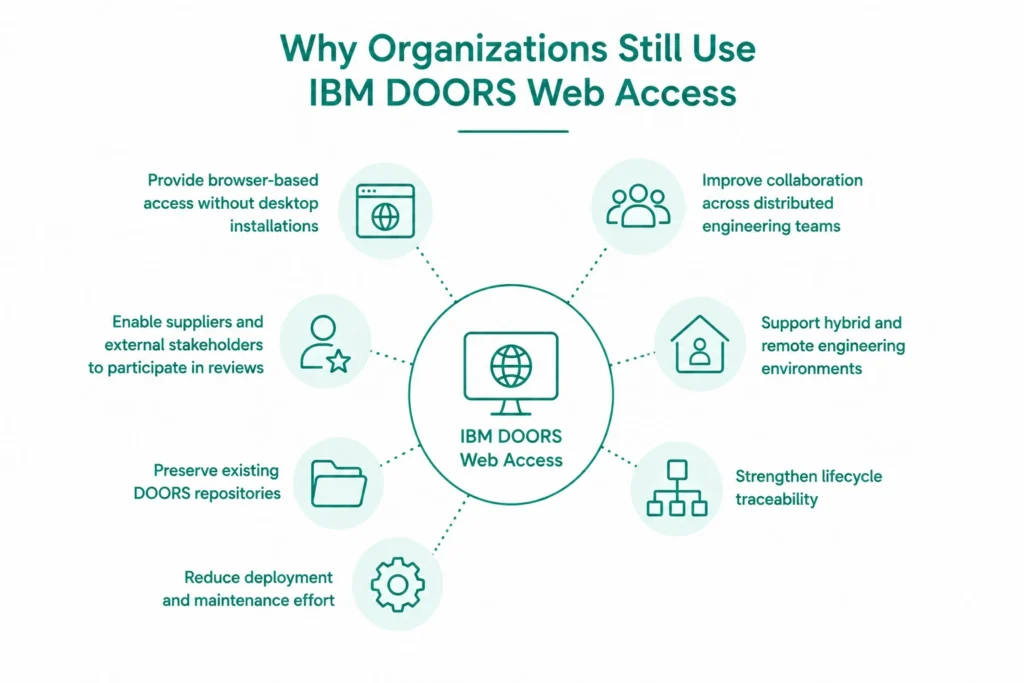
Organizations continue using IBM DOORS Web Access because it enables them to:
- Provide browser-based access without desktop installations
- Improve collaboration across distributed engineering teams
- Enable suppliers and external stakeholders to participate in reviews
- Support hybrid and remote engineering environments
- Preserve existing DOORS repositories
- Strengthen lifecycle traceability
- Reduce deployment and maintenance effort
For organizations planning long-term modernization, DWA also serves as a bridge toward migrating from DOORS to DOORS Next , allowing teams to gradually transition to a more collaborative and scalable engineering platform without disrupting ongoing projects.
Key Features of IBM DOORS Web Access (DWA)
IBM DOORS Web Access provides a comprehensive set of browser-based capabilities that improve requirements management while maintaining the robustness of the Classic DOORS platform.
1. Module Viewing and Customization
One of the most valuable capabilities of DWA is its ability to present engineering information in a way that aligns with each user’s responsibilities. Instead of navigating through large amounts of project data, users can personalize module layouts to focus on the information most relevant to their work.
Using the Layout menu, users can customize:
- Displayed attributes
- Column layouts
- Filters
- Sorting preferences
- Object views
- Module presentation
These customization options improve navigation across large engineering repositories while helping teams quickly locate relevant requirements.
For organizations implementing IBM ELM implementation best practices, customized views also improve productivity by presenting role-specific information to engineers, reviewers, quality teams, and project managers.
2. Editing and Managing Requirements
Effective requirements management requires more than simply documenting customer needs—it demands continuous updates, collaboration, and governance throughout the engineering lifecycle. IBM DOORS Web Access (DWA) enables authorized users to perform a wide range of day-to-day requirements management activities directly through a web browser, making it easier for engineering teams to maintain an accurate and centralized repository.
Users can perform several important actions within modules, including:
- Creating new requirement objects
- Editing existing requirements
- Updating requirement attributes
- Copying or moving requirement objects
- Deleting obsolete requirements
- Organizing requirements into structured hierarchies
Because these activities are performed directly within the IBM DOORS repository, every stakeholder has access to the latest approved information, reducing duplication, improving consistency, and minimizing manual errors.
For organizations managing large engineering programs, establishing standardized workflows is equally important. Following proven Tips for Successful IBM ELM Implementation helps organizations configure governance processes, user permissions, and review cycles that improve collaboration while maintaining complete control over engineering data.
By centralizing requirements editing within a secure browser-based platform, IBM DOORS Web Access increases engineering productivity while supporting the rigorous change management processes required in regulated industries.
3. Linking Related Information
Modern engineering projects involve thousands of interconnected artifacts, including requirements, design documents, software development tasks, verification activities, test cases, and change requests. Managing these relationships manually can quickly become difficult, especially as projects grow in complexity.
IBM DOORS Web Access simplifies this challenge by allowing users to establish meaningful relationships between engineering artifacts, providing complete visibility into how individual requirements contribute to the overall system.
Users can create several types of links, including:
Internal Requirement Links
Requirements within the same DOORS database can be linked together to establish parent-child relationships, dependencies, derived requirements, and verification paths. These relationships improve navigation and simplify impact analysis whenever changes occur.
External References
DWA also allows users to create external links to technical documents, specifications, standards, customer documentation, and other supporting resources, ensuring engineers always have access to the latest reference material without duplicating information.
OSLC-Based Lifecycle Integration
One of the most powerful capabilities of DWA is its ability to integrate with the broader IBM Engineering Lifecycle Management ecosystem using Open Services for Lifecycle Collaboration (OSLC).
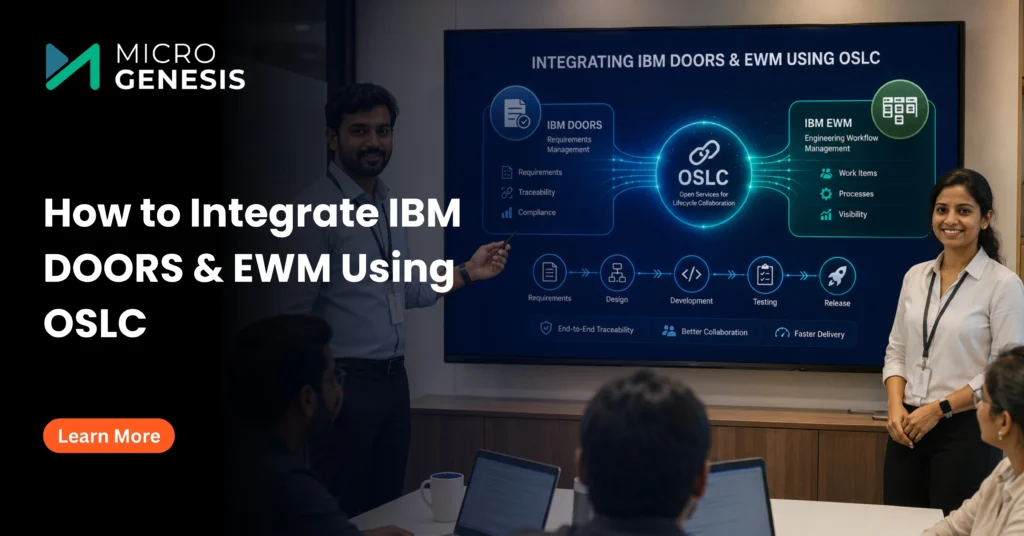
Through Integrating IBM Engineering Requirements Management DOORS and Engineering Workflow Management (EWM) Using OSLC , organizations can establish seamless traceability between requirements, development tasks, work items, test cases, defects, and change requests.
This connected Digital Thread enables engineering teams to perform faster impact analysis, improve change management, strengthen compliance, and gain complete visibility across the entire product development lifecycle.
4. Collaborative Discussions
Successful requirements management depends on effective communication between engineering teams, business stakeholders, quality engineers, and project managers. IBM DOORS Web Access enhances collaboration by allowing discussions to take place directly within the requirements environment rather than relying on disconnected emails or external communication tools.
Using the built-in Discussions feature, users can:
- Initiate discussions at the module level
- Comment on individual requirements
- Respond to stakeholder feedback
- Track discussion status
- Review historical conversations
- Sort discussions by author, date, or activity
Because conversations remain linked to the relevant engineering artifacts, organizations create a permanent record of engineering decisions that can be referenced during audits, design reviews, and future product enhancements.
As organizations modernize their engineering processes, many also adopt advanced Requirements Management with DOORS Next practices that extend collaboration across globally distributed engineering teams while maintaining end-to-end lifecycle traceability.
Keeping discussions directly within the requirements management platform improves transparency, reduces communication gaps, and ensures every stakeholder understands the rationale behind engineering decisions, ultimately leading to higher-quality products and more efficient project execution.
Benefits of Using IBM DOORS Web Access (DWA)
IBM DOORS Web Access (DWA) empowers engineering teams to manage, review, and collaborate on requirements more efficiently by providing secure browser-based access to the IBM DOORS repository. By eliminating the dependency on desktop installations, DWA enables organizations to improve collaboration, strengthen traceability, and accelerate engineering workflows across geographically distributed teams.
Whether organizations are developing safety-critical products or managing large-scale engineering programs, DWA provides the flexibility needed to involve every stakeholder in the requirements management process while maintaining governance and data integrity.
1. Enhanced Accessibility
One of the most significant advantages of IBM DOORS Web Access is its ability to provide secure access to engineering requirements from virtually any location using a standard web browser.
Key Benefits
- Browser-based access without desktop installation
- Supports remote and hybrid engineering teams
- Reduces IT administration and maintenance
- Enables secure collaboration across multiple locations
- Improves stakeholder participation
With today’s engineering teams often spread across multiple offices and countries, browser-based accessibility has become essential. DWA allows engineers, project managers, quality teams, suppliers, and customers to review and contribute to requirements without installing specialized software.
This increased accessibility accelerates project reviews, shortens approval cycles, and ensures stakeholders always have access to the latest engineering information.
Organizations implementing IBM ELM Product Engineering best practices through the insights shared in 7 Reasons IBM ELM Product Engineering often leverage browser-based collaboration to improve engineering productivity while supporting globally distributed development teams.
2. Improved Collaboration
Engineering success depends on continuous communication between cross-functional teams. IBM DOORS Web Access simplifies collaboration by enabling discussions directly within the requirements repository, ensuring every conversation remains connected to the relevant engineering artifact.
Key Benefits
- Requirement-specific discussions
- Module-level collaboration
- Faster stakeholder reviews
- Improved engineering communication
- Better decision transparency
Instead of relying on lengthy email chains or external collaboration tools, DWA allows engineering teams to capture feedback where it matters most—alongside the actual requirement.
This contextual collaboration reduces misunderstandings, improves review quality, and creates a permanent history of engineering decisions that can be referenced throughout the product lifecycle.
Because discussions remain attached to requirements, organizations improve accountability while ensuring engineering knowledge is retained long after projects are completed.
3. Seamless Integration
Modern engineering organizations depend on connected tools that enable information to flow seamlessly across requirements management, software development, systems engineering, testing, and project management.
IBM DOORS Web Access supports Open Services for Lifecycle Collaboration (OSLC), enabling organizations to integrate with the broader IBM Engineering Lifecycle Management ecosystem and selected third-party engineering applications.
Key Benefits
- End-to-end lifecycle traceability
- Connected Digital Thread
- Improved engineering visibility
- Better impact analysis
- Reduced manual data duplication
DWA can integrate with Engineering Workflow Management (EWM), Engineering Test Management (ETM), IBM Rhapsody, reporting platforms, and other engineering solutions to create a unified engineering environment.
Organizations using model-based systems engineering can further strengthen collaboration by integrating engineering requirements with system architecture models. Our Comprehensive Guide to Rhapsody Model Manager: Revolutionizing Architectural Management explains how architectural models and requirements can work together to improve engineering consistency and lifecycle traceability.
These integrations help engineering teams establish a continuous Digital Thread that connects requirements, architecture, implementation, testing, and validation throughout the product lifecycle.
4. Efficient Requirements Management
Managing thousands of engineering requirements can become increasingly challenging without the right tools and processes. IBM DOORS Web Access simplifies requirements management by providing a centralized platform where teams can efficiently create, organize, review, and maintain engineering requirements.
Key Benefits
- Centralized requirements repository
- Faster editing and updates
- Flexible layouts and filtering
- Improved engineering productivity
- Reduced administrative effort
Users can customize layouts, apply filters, organize requirements into structured hierarchies, and quickly locate relevant information within large engineering repositories. These capabilities improve efficiency while reducing manual effort and inconsistencies.
Organizations developing software-intensive products such as electric vehicles, autonomous systems, and connected devices require robust requirements management to coordinate multiple engineering disciplines. As discussed in Addressing Complexity in Electric Vehicle (EV) System Design and Development Using IBM ELM , centralized requirements management plays a critical role in managing increasing product complexity while maintaining complete lifecycle traceability.
By combining browser-based accessibility with structured requirements management, IBM DOORS Web Access enables engineering teams to deliver higher-quality products while improving collaboration, governance, and overall project efficiency.
Best Practices for Using IBM DOORS Web Access (DWA)
Implementing IBM DOORS Web Access is only the first step toward effective requirements management. To maximize its value, organizations should establish standardized governance practices that ensure requirements remain accurate, traceable, and aligned throughout the product development lifecycle.
Following these best practices helps engineering teams improve collaboration, reduce project risks, and maintain compliance with industry standards.
1. Regularly Review and Update Requirements
Requirements are dynamic and often evolve as customer needs, regulatory standards, or technical constraints change. Keeping requirements current is essential to prevent inconsistencies and reduce downstream engineering issues.
Best practices include:
- Schedule periodic requirements reviews.
- Update obsolete or duplicate requirements promptly.
- Validate requirement completeness before project milestones.
- Maintain version history and approval workflows.
- Ensure stakeholders review critical changes.
Keeping requirements synchronized with ongoing development reduces rework and ensures every team is working with the latest approved information.
2. Encourage Collaborative Reviews
One of DWA’s greatest strengths is its browser-based collaboration capabilities. Organizations should encourage engineers, business analysts, architects, quality teams, and project managers to participate in discussions directly within the requirements repository.
Recommendations:
- Capture discussions against specific requirements.
- Resolve comments before approvals.
- Assign reviewers based on expertise.
- Document engineering decisions within discussion threads.
- Track unresolved issues before release.
This collaborative approach improves communication while creating a permanent audit trail for future reference.
3. Build a Strong Traceability Strategy
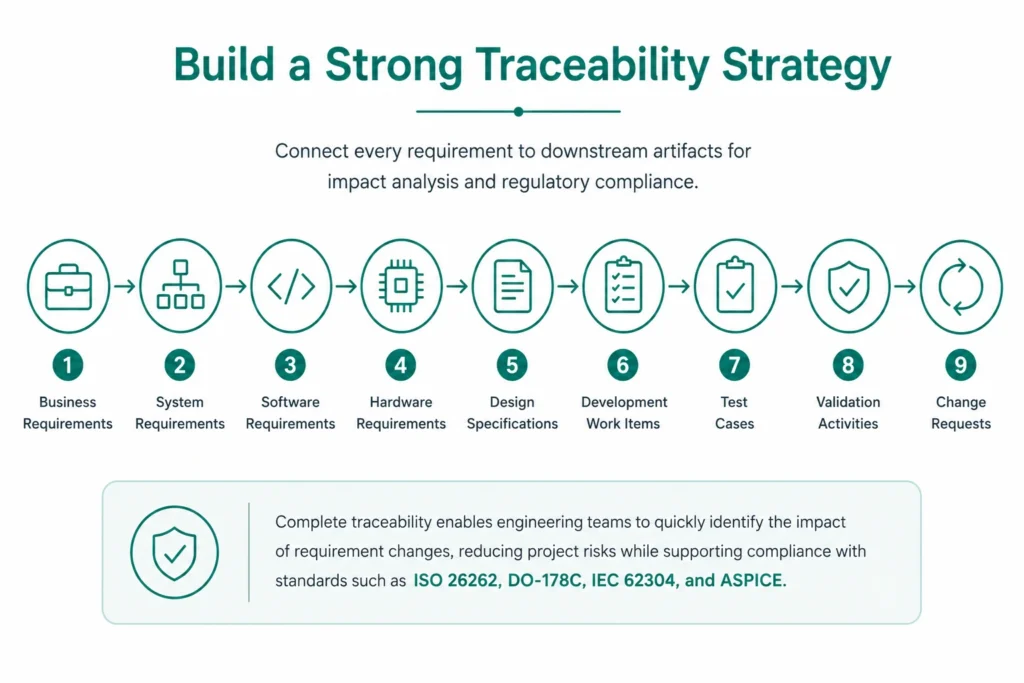
Traceability is one of the primary reasons organizations choose IBM DOORS. Every requirement should have clearly defined relationships with downstream engineering artifacts to support impact analysis and regulatory compliance.
Organizations should establish standardized linking practices for:
- Business requirements
- System requirements
- Software requirements
- Hardware requirements
- Design specifications
- Development work items
- Test cases
- Validation activities
- Change requests
Complete traceability enables engineering teams to quickly identify the impact of requirement changes, reducing project risks while supporting compliance with standards such as ISO 26262, DO-178C, IEC 62304, and ASPICE.
4. Take Advantage of Lifecycle Integration
IBM DOORS Web Access delivers even greater value when integrated with the broader IBM Engineering Lifecycle Management ecosystem.
Organizations should connect DWA with engineering planning, software development, testing, reporting, and systems engineering tools to establish a complete Digital Thread across the product lifecycle.
Integrated engineering environments provide:
- Improved project visibility
- Faster impact analysis
- Automated traceability
- Better reporting
- Higher engineering productivity
- Reduced manual effort
Many organizations also underestimate the complexity of engineering reporting. While IBM provides reporting capabilities, creating meaningful dashboards and compliance reports often requires specialized expertise. Understanding Why IBM ELM Reporting Still Requires an Expert can help organizations build reporting frameworks that provide actionable engineering insights rather than simply generating static reports.
What Is the IBM DOORS Requirements Management Tool and Why Is Requirements Traceability Important?
Requirements management is much more than documenting customer needs—it involves controlling changes, maintaining relationships between engineering artifacts, and ensuring every requirement can be traced throughout the product lifecycle.
IBM Engineering Requirements Management DOORS has been the industry standard for complex systems engineering for decades because it enables organizations to manage large-scale requirements repositories while maintaining complete traceability.
Requirements traceability allows organizations to:
- Track requirements from concept to delivery.
- Analyze the impact of requirement changes.
- Link requirements with architecture and design.
- Connect requirements to development activities.
- Validate requirements through testing.
- Support regulatory compliance and audits.
Without effective traceability, engineering teams risk inconsistent implementations, missed requirements, increased defects, and costly project delays.
IBM DOORS Web Access extends these capabilities by making requirements and traceability information accessible through a web browser, allowing every stakeholder to participate in reviews and decision-making without requiring the desktop client.
IBM DOORS Web Access (DWA) vs. DOORS Next
Organizations evaluating their long-term requirements management strategy often compare IBM DOORS Web Access with IBM DOORS Next.
While DWA enhances accessibility for Classic DOORS users, DOORS Next is a modern web-native requirements management platform built on the IBM Engineering Lifecycle Management architecture.
| IBM DOORS Web Access | IBM DOORS Next |
| Browser interface for Classic DOORS | Native web-based requirements management platform |
| Extends existing DOORS deployments | Built for modern collaborative engineering |
| Ideal for organizations maintaining legacy DOORS environments | Designed for cloud-ready and enterprise-scale development |
| Supports existing repositories | Offers enhanced collaboration, configuration management, and reporting |
| Lower migration effort | Best suited for long-term digital transformation |
Organizations planning future modernization frequently evaluate IBM DOORS Next vs. Polarion to determine which platform best aligns with their engineering processes, scalability requirements, and compliance objectives.
For organizations heavily invested in Classic DOORS, IBM DOORS Web Access remains an excellent solution for improving accessibility while preparing for a gradual transition to next-generation requirements management.
Frequently Asked Questions (FAQs)
1. What is IBM DOORS Web Access (DWA)?
IBM DOORS Web Access (DWA) is a browser-based client for IBM Engineering Requirements Management DOORS that enables users to access, review, edit, and collaborate on requirements without installing the traditional desktop application. It improves accessibility while maintaining the robust requirements management capabilities of Classic DOORS.
2. Is IBM DOORS Web Access suitable for remote engineering teams?
Yes. DWA is specifically designed to support distributed engineering teams by providing secure browser-based access to requirements from virtually any location. This allows engineers, project managers, suppliers, and customers to participate in reviews and collaborate efficiently regardless of geographical boundaries.
3. Can IBM DOORS Web Access integrate with other IBM Engineering Lifecycle Management tools?
Absolutely. DWA supports OSLC (Open Services for Lifecycle Collaboration), enabling seamless integration with IBM Engineering Workflow Management (EWM), Engineering Test Management (ETM), IBM Rhapsody, and other engineering tools. These integrations create end-to-end traceability across the engineering lifecycle.
4. Does IBM DOORS Web Access support requirements traceability?
Yes. DWA enables organizations to establish and maintain traceability links between requirements, design artifacts, development tasks, test cases, and change requests. This helps teams perform impact analysis, simplify audits, and meet regulatory compliance requirements.
5. Should organizations continue using DWA or migrate to DOORS Next?
The answer depends on business objectives, existing infrastructure, and long-term digital transformation strategies. Organizations with mature Classic DOORS deployments can continue benefiting from DWA while planning a phased migration strategy. Others seeking enhanced collaboration and modern web-native capabilities may choose to adopt DOORS Next.
Why Choose MicroGenesis for IBM Engineering Lifecycle Management?
Successfully implementing and optimizing IBM Engineering Requirements Management requires more than software deployment—it demands deep expertise in engineering processes, systems integration, compliance, migration, and lifecycle management.
As an IBM Platinum Business Partner, MicroGenesis has helped organizations across automotive, aerospace, defense, industrial manufacturing, electronics, healthcare, and other regulated industries successfully implement and modernize their IBM Engineering Lifecycle Management environments.
Our IBM ELM consulting services include:
- IBM Engineering Requirements Management (DOORS & DOORS Next)
- IBM Engineering Workflow Management (EWM)
- IBM Engineering Test Management (ETM)
- IBM Rhapsody and Model-Based Systems Engineering (MBSE)
- IBM ELM migration and modernization
- Requirements traceability implementation
- Engineering lifecycle integrations
- OSLC integration services
- Custom reporting and dashboards
- User training and managed support
We also help organizations prepare for evolving IBM platform changes. For example, understanding the impact of IBM Discontinuation of MSSQL Support is essential for planning infrastructure upgrades and ensuring long-term platform stability.
Whether you’re deploying IBM DOORS Web Access, modernizing legacy DOORS environments, or implementing a complete IBM Engineering Lifecycle Management solution, our consultants help you reduce implementation risks, improve collaboration, and maximize return on investment.
Conclusion
IBM Engineering Requirements Management DOORS – Web Access (DWA) remains a valuable solution for organizations seeking secure, browser-based access to engineering requirements while continuing to leverage their existing IBM DOORS investments. Its intuitive interface, collaborative discussion capabilities, customizable views, robust traceability, and seamless integration with the IBM Engineering Lifecycle Management ecosystem enable engineering teams to work more efficiently and make informed decisions throughout the product development lifecycle.
As engineering projects become increasingly complex, organizations need scalable requirements management solutions that support distributed teams, maintain regulatory compliance, and provide complete lifecycle visibility. IBM DOORS Web Access addresses these challenges by extending the power of Classic DOORS to a modern web environment, making collaboration easier without sacrificing governance or traceability.
If you’re looking to deepen your understanding of browser-based requirements management, explore our detailed guide on Mastering IBM DOORS Web Access (DWA) , which covers advanced capabilities, implementation considerations, and practical use cases.
Partnering with MicroGenesis ensures your organization can successfully implement, optimize, integrate, and modernize IBM Engineering Lifecycle Management solutions, helping you accelerate product development, improve engineering collaboration, and build high-quality products with confidence.